
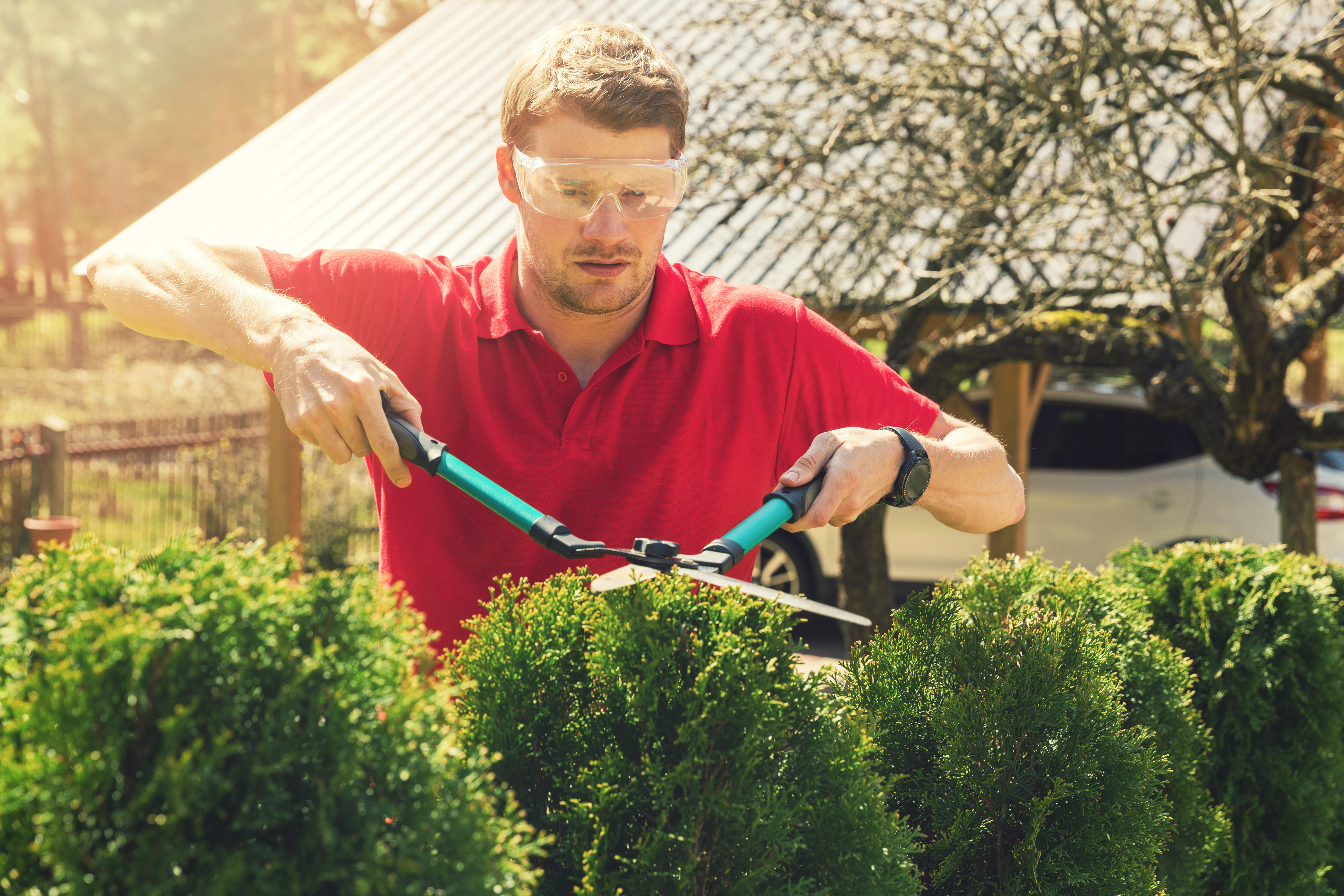
Ready to start yard work? here's how to protect your eyes
As the days get warmer, many have lots of yard work ahead. Whether you're mowing the lawn, trimming bushes, or clearing snow, yard work is a never-ending chore. All the more reason to remember an important part of yard work: protecting your eyes.
Up to 40% of eye injuries occur while people are working in the yard, doing home repairs, cooking, or cleaning. Many of these injuries can be easily avoided with proper eye safety protocols.
Here are some yard work safety tips to help you prevent eye injuries while completing your outside projects.
1. Wear safety glasses for yard work
The importance of wearing safety glasses for yard work cannot be overstated. Safety glasses can help protect your eyes from irritation and damage caused by flying objects, chemicals, and even pollen. Lawn equipment, such as mowers, string trimmers, leaf blowers, and snow blowers, can easily toss projectiles at high rates of speed that could damage an unprotected eye.
If a foreign object, like a piece of debris tossed from a mower or leaf blower, gets in your eye, it could cause a scratched cornea. Larger objects (like rocks or branches) hitting your eye can cause additional damage, like a detached retina, ruptured blood vessels, and even permanent vision loss.
Always wear yard work goggles or safety glasses with ANSI-certified resistant protection and impact-resistant lenses to give your eyes extra protection while:
-
Mowing the lawn
-
Using lawn equipment such as a string trimmer or leaf blower
-
Trimming trees and bushes
-
Using chemicals such as fertilizer or weed killer
-
Operating a snow blower
2. Pick up sticks and debris before mowing the lawn
Before mowing your lawn, make sure to walk through your yard and pick up any objects, such as rocks, sticks, tools, or toys. If run over by the mower, these objects could fly from the mower at high rates of speed, potentially causing serious eye injury.
Do a quick yard pick-up before you get the mower out to remove potentially hazardous rocks and sticks.
3. Keep chemicals away from your eyes
If you use chemicals such as fertilizer, weed killer, or pool chemicals in your garden or yard, you may not realize your eyes are at risk. Chemicals can spread into the air, spill, and even transfer from your hands to your eyes, all of which can irritate your eyes and potentially cause chemical eye burns.
Take these steps to help keep your eyes safe around lawn chemicals:
-
Wear goggles and gloves when working with chemicals.
-
Store all chemicals in a secure area, out of reach of children and pets.
-
Make sure all spray nozzles are pointed away from you.
-
Wash your hands thoroughly after handling lawn chemicals.
If you do get chemicals in your eyes, immediately wash your hands, flush your eyes using lukewarm water, and remove contact lenses if you are wearing them. Then, contact your eye doctor or seek emergency medical care.
4. Avoid touching your eyes
When working in your yard, avoid touching your eyes.
In the yard and garden, your hands can collect dust, debris, pollen, bacteria, chemicals, and other substances that could lead to eye irritation, infection, or allergies. After working in the yard, always wash your hands thoroughly before touching your eyes.
5. Properly maintain your lawn equipment
An important part of keeping your eyes safe while working in the lawn is to make sure all your equipment is in good working order. Poorly maintained equipment is more likely to break during use, which can lead to pieces popping off and becoming projectiles.
Make sure you read your equipment safety manuals and inspect tools before using them to ensure they are in good condition.
6. Keep kids away from lawn equipment
It’s important to protect bystanders, especially young children, from getting eye injuries. Mowers, string trimmers, snow blowers, and other lawn equipment can throw projectiles, such as rocks or sticks, that could hit the eyes of someone standing nearby and cause severe damage.
Keep kids away when you’re operating these machines and ensure anyone else working in the yard with you is wearing proper eye protection.
Visit Your Eye Doctor
Keep these yard work safety tips in mind and make eye safety a priority while working outside this year.
Plus, don’t forget to schedule your annual eye exam (if you haven’t already) with a DeltaVision® network doctor. They can help you keep your eyes healthy and choose the right products to protect your eyes while doing yard work.
This article previously appeared on VSP, Delta Dental of Tennessee’s DeltaVision® partner.
Related Articles
Find a dental plan that is right for you
Find a Dental Plan